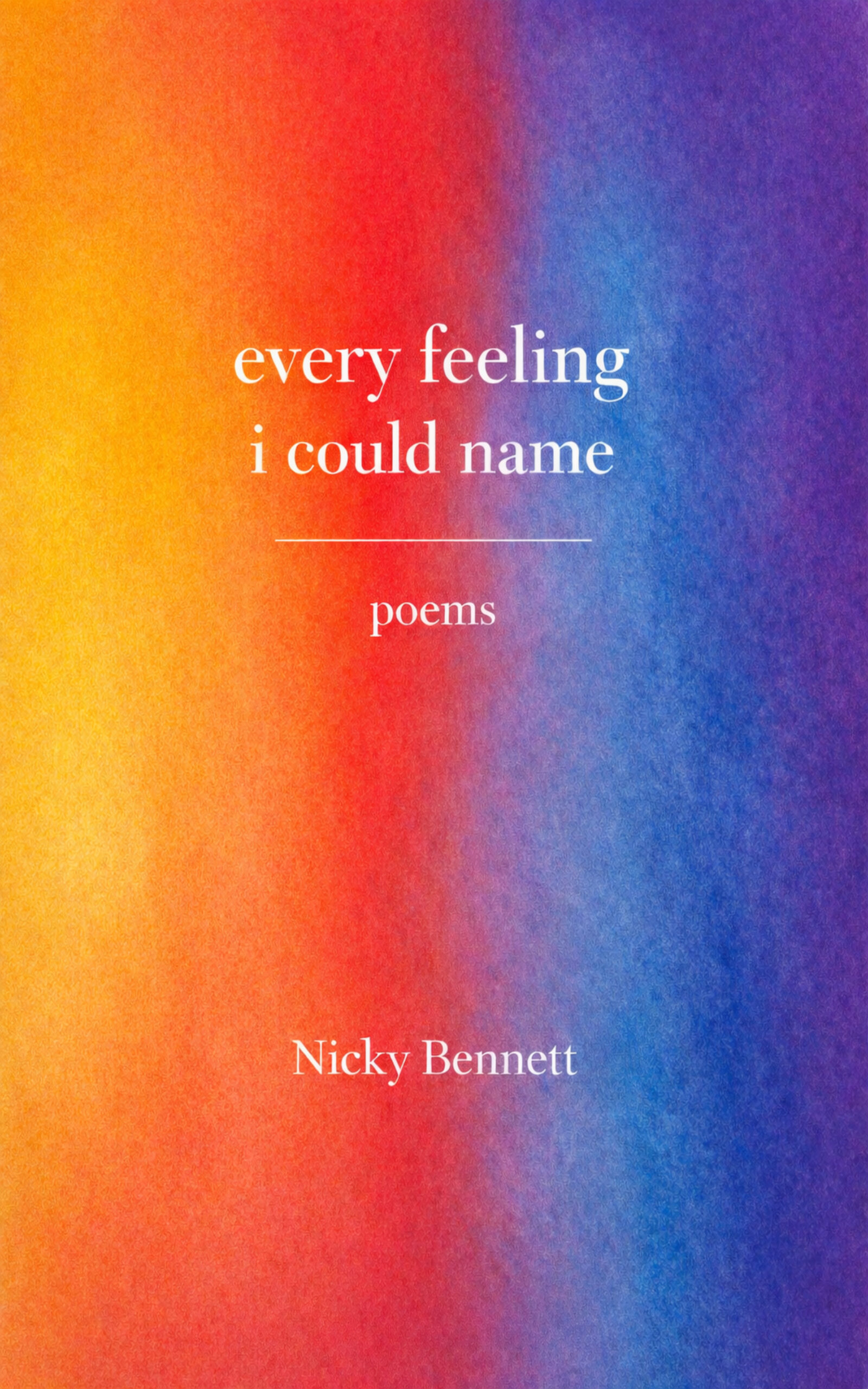
A Book About the Language of Emotion
There’s a strange gap in how many of us learn to describe the world.
From a young age, we’re taught the names of colors. We learn to distinguish red from orange, blue from green, and eventually more subtle shades in between. Over time, our vocabulary grows more precise. We learn words like crimson, lavender, turquoise, and amber. The more language we have, the more clearly we can describe what we see.
But when it comes to emotions, many of us grow up with a much smaller vocabulary.
Ask someone how they feel, and you’ll often hear the same few words repeated: good, bad, stressed, fine, tired. These words are useful, but they rarely capture the full complexity of what someone may be experiencing.
Underneath the word stressed might be anxiety, frustration, pressure, or exhaustion. Underneath fine might be relief, gratitude, contentment, or quiet loneliness.
Human emotional life is incredibly rich and complex. But many of us move through it with only a handful of words to describe what’s happening inside us.
That gap—the distance between emotional experience and emotional language—is part of what inspired my newest book, Every Feeling I Could Name.
Why I Wrote This Book
The idea behind Every Feeling I Could Name began with a simple question:
What happens when we try to name our emotions more precisely?
Not to eliminate them.
Not to control them.
But simply to notice them.
Psychologists sometimes talk about something called emotional granularity. It’s the ability to recognize and describe emotional experiences with specificity rather than broad categories. Someone with high emotional granularity might distinguish between frustration and anger, between disappointment and grief, between calm and contentment.
Research suggests that this skill can have meaningful benefits. People who can identify emotions clearly often find it easier to regulate those emotions and communicate about them with others.
But emotional granularity isn’t something most of us learn formally. It develops gradually as we encounter language that helps us recognize what we’re feeling.
That’s where poetry can play a surprisingly powerful role.
Poetry often captures emotions through imagery, memory, and small moments rather than definitions. A poem might describe the quiet tension of waiting, the restless energy of anticipation, or the soft relief that follows a difficult conversation.
Sometimes a few lines of poetry can describe a feeling more clearly than an entire paragraph of explanation.
That recognition—the moment when someone reads a line and thinks Yes, that’s exactly what that feeling is like—can be powerful.
I wanted to create a collection that invited readers into those moments of recognition.
Forty Emotions, One Emotional Landscape
Every Feeling I Could Name is organized around forty emotional states.
Each poem focuses on a single emotion and reflects on how that feeling might appear in everyday life—through small experiences, memories, physical sensations, or quiet observations.
To give the collection structure, the emotions are loosely organized using a framework from psychology called the Circumplex Model of Affect. This model suggests that emotions can be understood along two basic dimensions:
- Valence — whether an emotion feels pleasant or unpleasant
- Activation — whether the emotion feels high-energy or low-energy
When these two dimensions are combined, they create four broad emotional spaces.
The book explores these spaces through four sections:
Rising Light
High energy, pleasant emotions like curiosity, inspiration, and excitement.
Quiet Ground
Low energy, pleasant emotions such as calm, gratitude, and contentment.
Fire & Static
High energy, unpleasant emotions including anxiety, frustration, and anger.
Heavy Weather
Low energy, unpleasant emotions like sadness, loneliness, and exhaustion.
Each section moves through ten emotional states, creating a kind of emotional map. The poems are short, reflective, and intentionally simple. They aren’t meant to define emotions in a clinical sense, but to create small moments of recognition.
In many ways, the book is an invitation to pause and notice the emotional landscape we move through every day.
Naming Emotions Doesn’t Make Them Disappear
One of the things I’ve learned through writing and reflection is that naming emotions doesn’t make them vanish.
Sadness doesn’t dissolve just because we recognize it. Anxiety doesn’t disappear because we put a word to it.
But naming emotions does make them visible.
And visibility matters.
When we can recognize what we’re feeling, we begin to understand it differently. Instead of being swept along by vague discomfort or tension, we can pause and say: This is frustration. Or This is loneliness. Or This is relief.
That small shift—from confusion to recognition—can create a surprising amount of clarity.
It can also create compassion.
When we begin to see emotions as signals rather than problems, we may start responding to ourselves with more patience.
A Resource for Therapists and Facilitators
While writing this book, I realized something interesting.
The poems were not only reflections on emotional experience—they were also natural conversation starters.
A therapist might read a poem about anxiety with a client and ask:
Does this feeling seem familiar to you?
A counselor might use a poem about frustration as a way to talk about blocked goals or expectations.
A mindfulness group might read a poem about calm or gratitude and use it as a moment of reflection.
Because each poem centers on a specific emotional state, the book naturally lends itself to discussion about emotional awareness and emotional literacy.
So alongside the book, I created something additional.
I put together a professional companion and discussion resource designed for therapists, counselors, educators, and group facilitators.
The companion explores topics like:
- emotional granularity and emotional vocabulary
- the circumplex model of affect
- using poetry in therapeutic contexts
- reflection and journaling exercises
- discussion prompts for each of the forty emotions in the book
It’s not a clinical manual or treatment protocol. Instead, it’s meant to be a reflective resource—something that can support conversations about emotions in therapeutic or educational settings.
Learning the Language of Feeling
At its heart, Every Feeling I Could Name is about something very simple.
It’s about learning the language of feeling.
Most of us spend our lives navigating a wide range of emotional experiences. Some of those emotions are joyful and expansive. Others are heavy or uncomfortable. Many fall somewhere in between.
But when we begin to notice these emotions more clearly—and when we begin to name them—we start to understand our inner lives in a deeper way.
We see patterns.
We recognize needs.
We notice the small shifts that shape our days.
The goal isn’t to achieve perfect emotional clarity. Human emotional life is far too complex for that.
The goal is simply to become a little more fluent in the language of feeling.
If this book helps even a few people pause and recognize an emotion they might not have named before, then it has done exactly what I hoped it would do.